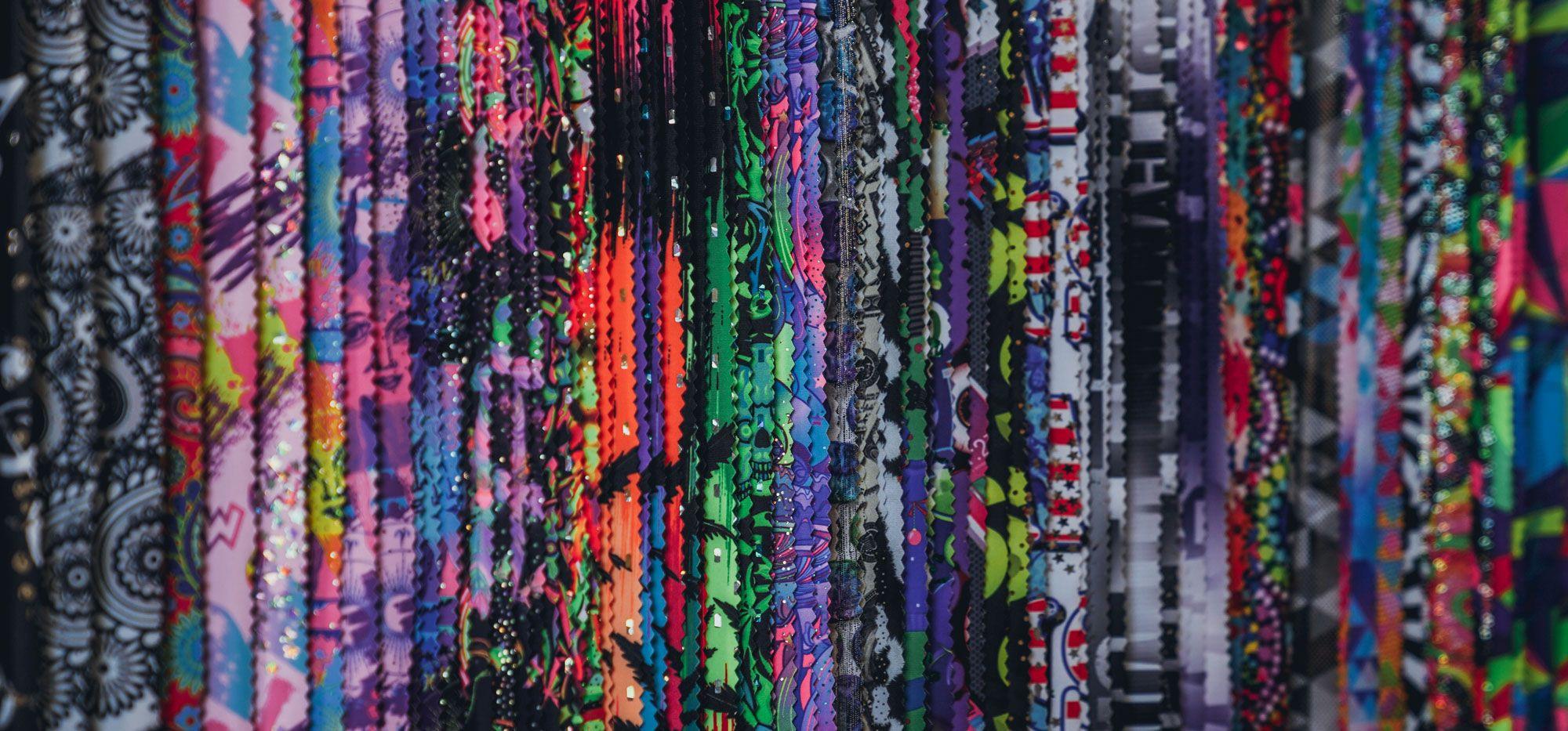








Sustainable Dye Sublimation Printing at Funki Fabrics
By FunkiFabrics, 21 May 2026
As sustainability becomes an increasingly important focus across the fashion, dancewear and sportswear industries, brands are looking for manufacturing partners that can deliver both exceptional print quality and more environmentally conscious production methods.
At Funki Fabrics, we are committed to continually improving our processes and investing in smarter, more sustainable ways to produce digitally printed textiles. One of the key technologies supporting this commitment is our dye sublimation printing process.


What is Dye Sublimation Printing?
Dye sublimation is a digital printing process primarily used for polyester fabrics and performance textiles. The design is first printed onto transfer paper using specialist water-based sublimation inks. Heat and pressure are then used to permanently transfer the design into the fabric fibres.
The result is a vibrant, durable print with exceptional colour clarity and detail.
Because the dye becomes part of the fabric itself rather than sitting on the surface, sublimation printing delivers outstanding colour fastness, flexibility and long-lasting performance, making it ideal for activewear, dancewear, swimwear, fashion and costume applications.

A Dry Printing Process with No Water Waste
One of the biggest environmental advantages of dye sublimation printing is that it is a dry process.
Unlike traditional textile dyeing and printing methods, sublimation does not require large quantities of water during production. There are no washing stages, steaming baths or excess dye run-off, helping to significantly reduce water consumption and waste.
At Funki Fabrics, we use water-based sublimation inks to support a cleaner and more environmentally conscious production process.
Key sustainability benefits include:
No water used during the transfer stage
Minimal waste compared to conventional dyeing
Reduced chemical usage
Cleaner production processes
Efficient short-run and on-demand printing

Printing on Recycled and Specialist Fabric Bases
At Funki Fabrics, sustainability and creativity go hand in hand. Alongside our digital printing capabilities, we offer a wide range of fabric bases suitable for dye sublimation printing, including recycled performance fabrics and specialist shine fabrics designed to help collections stand out.
One popular option is our PF1004 Life Recycled base, a recycled polyester fabric with a subtle sheen that enhances printed colour and creates a premium finish. It is an excellent choice for brands looking to combine sustainability with high visual impact.
For customers wanting even more stage presence and standout appeal, our shine bases offer exciting creative possibilities. Our PF1017 Hologram Shine base delivers a striking reflective finish that creates real wow factor for dancewear, sportswear, performance costumes and fashion collections.
From eco-conscious recycled fabrics to bold speciality finishes, there is truly something for every creative project.
Supporting More Responsible Textile Production
Digital textile printing also allows for far more efficient production compared to traditional bulk manufacturing methods.
Because we can print on demand, brands can:
Order smaller quantities with quick turnaround times
Reduce overproduction
Minimise excess stock
Produce more targeted collections
React quickly to trends and customer demand
This flexibility helps businesses operate more efficiently while supporting more responsible manufacturing practices.
Innovation and Sustainability at Funki Fabrics
At Funki Fabrics, we are always striving to improve our environmental practices and invest in smarter production technologies. From using water-based inks to offering recycled fabric bases and efficient digital textile printing solutions, sustainability remains an important part of how we operate.
We continue to work with brands, designers and manufacturers across fashion, sportswear, dancewear and performance wear to deliver high-quality printed textiles with a focus on innovation, efficiency and responsible production.